Wide Glazed Span
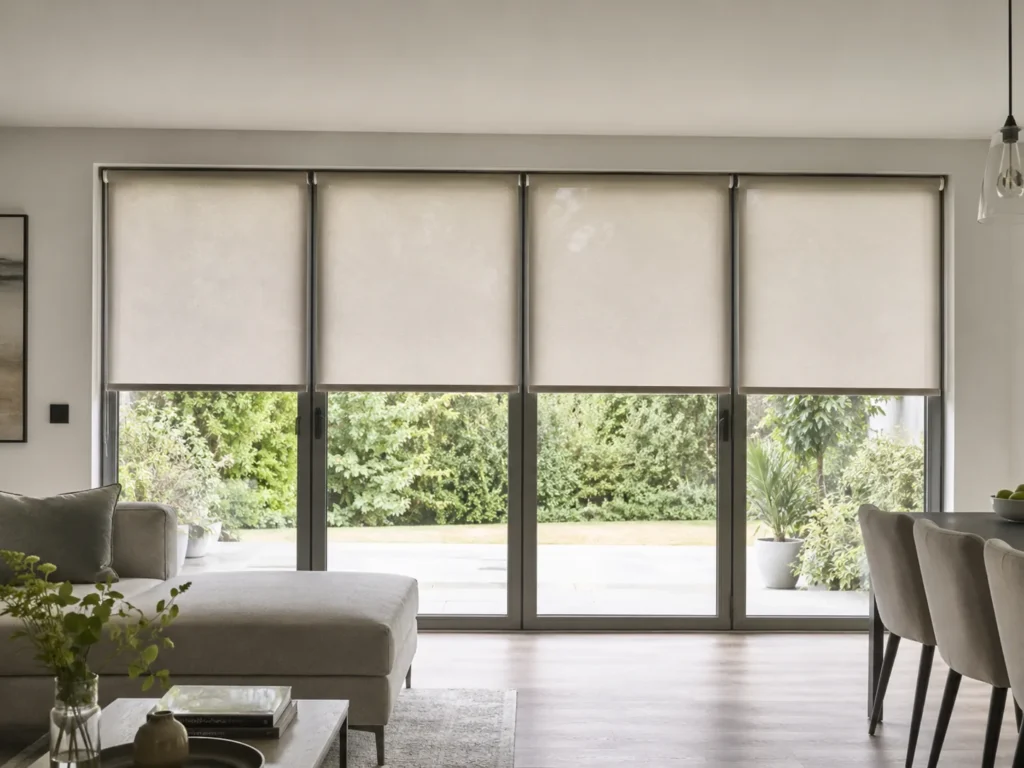
A broad opening may work better as several controlled sections rather than assuming one blind should cover the entire width.
Made to Measure · Greater Manchester
Choose patio door blinds planned around wide glazing, sliding movement and everyday access. Heavenly Blinds provides practical advice, free measuring, a free quotation and professional fitting across Greater Manchester.
Tell us about your patio doors, how you use them and what you would like the blinds to achieve.
Understanding the Opening
Patio door blinds are blinds chosen specifically around broad glazed doors where privacy, daylight and normal access all need to work together.
The term does not describe one single blind style. Different blinds for patio doors suit different door layouts, panel movements and ways of using the opening. Sliding patio door blinds also need to work around the part of the doorway you use most often rather than simply covering the glass.
Explore Door Blinds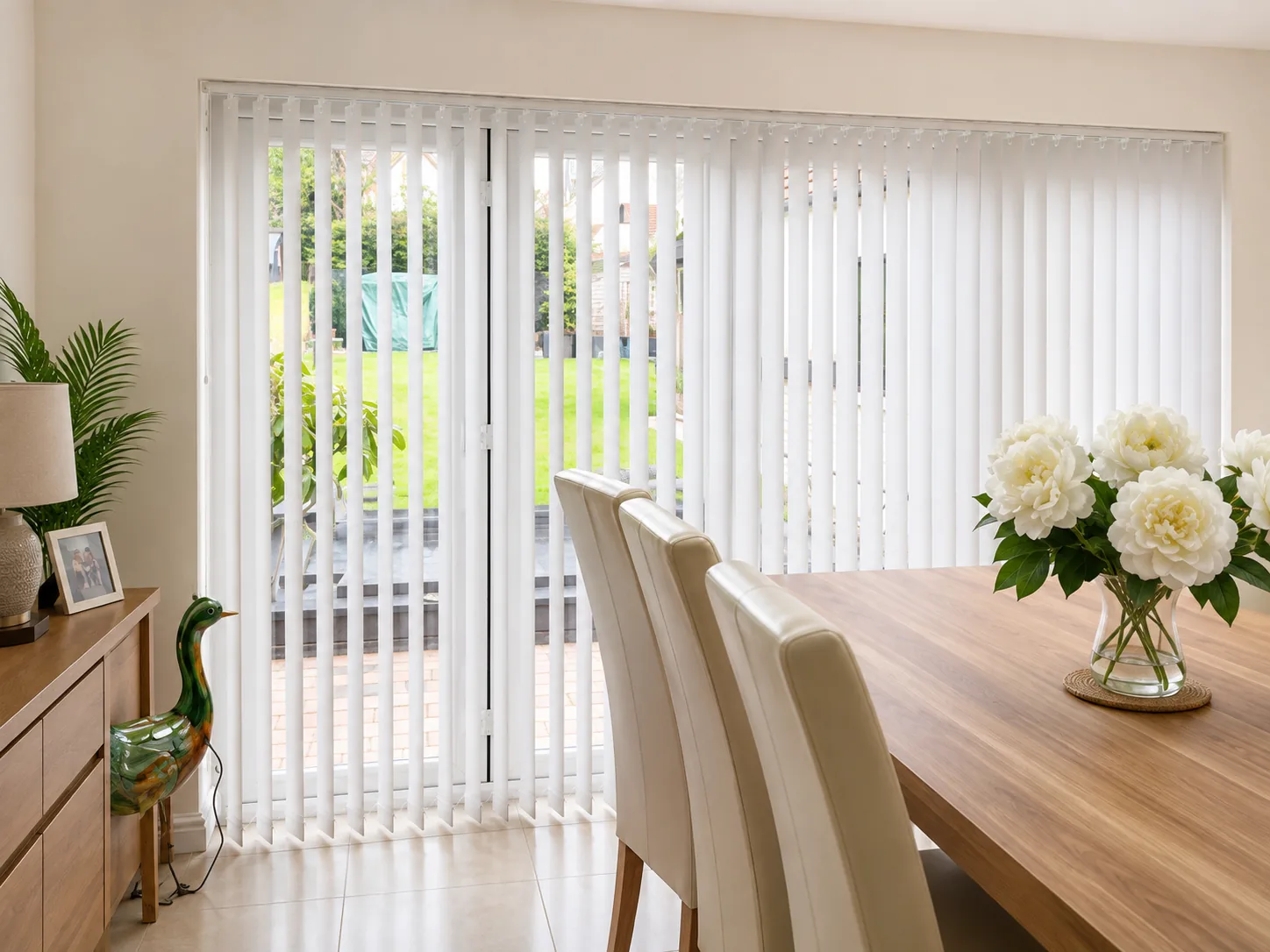
Why the Opening Matters
Large sliding doors combine a broad area of glass with moving panels and a regular access route. Those factors affect how the blind should divide, operate and sit when open.
A broad opening may work better as several controlled sections rather than assuming one blind should cover the entire width.
The blind arrangement needs to make sense around the way individual door panels travel, overlap or remain fixed.
The section used as the normal walk-through should remain straightforward to reach when the blinds are opened.
Every blind has somewhere to sit when open. That resting position matters more on a doorway than on an ordinary fixed window.
Doors used several times each day place more importance on quick, uncomplicated operation and convenient clearing of the opening.
The full door layout should be considered together rather than treating each pane of glass as an unrelated window.
Plan the Layout
The first layout decision is whether suitable glazed panels should have independent blinds or whether the wider doorway should work as one coordinated treatment.
Control
Individual treatment can allow different glazed sections to be adjusted separately when the selected system supports it.
Coverage
A whole-opening treatment creates one broader visual and operating arrangement across the patio doors.
Access
Separate blinds can be useful where one door panel is used much more often than the others.
Operation
Dividing the opening can mean more individual blinds to operate, while one treatment reduces the number of separate controls.
Movement
Panel-mounted blinds must work with their own door movement; wider treatments must work around the complete opening.
Clearance
The chosen arrangement determines where the covering sits when you want the doorway clear.
Appearance
Panel-by-panel treatment creates a more divided look, while broader coverage can appear more continuous across the glazing.
Suitability
The better approach depends on the actual doors, frame, access pattern and the blind system being considered.
Before You Choose
A blind can look suitable but still be awkward in everyday use. These four checks help narrow the options before a made-to-measure solution is agreed.
01 · Movement
Identify which panels move, how they travel and which section of the doorway is normally used for access.
02 · Access
Think about how much usable doorway you need when the blinds are open and where people normally walk through.
03 · Frame & Fittings
Handles, locks, frame sections and visible obstructions can affect which blind arrangements are realistic.
04 · Measuring
The preferred system should be checked against the actual opening during professional measuring before it is ordered.
Frame-Fitted Options
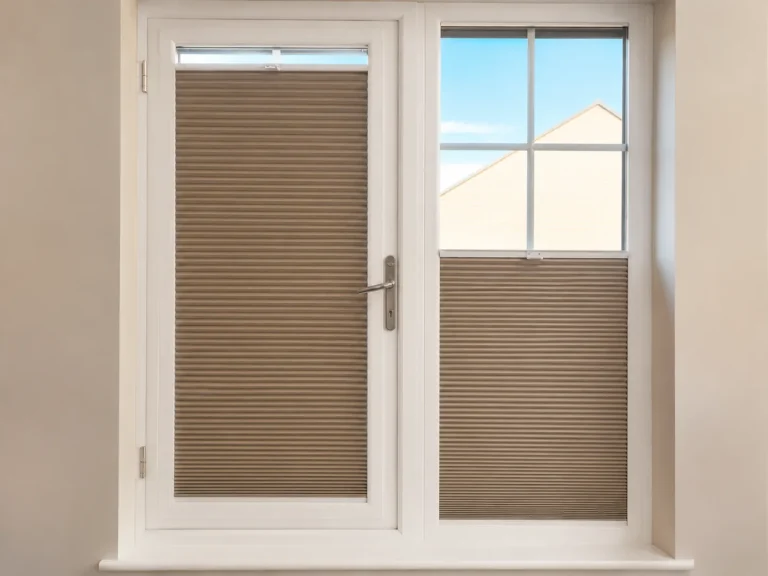
Perfect Fit blinds for patio doors can give compatible glazed panels their own close-fitting blind. Suitability still depends on the actual frame, glazing, hardware and panel movement.
Compact Fabric
A compact folded-fabric option for compatible glazed panels where a neat individual-panel treatment is preferred.
Explore Perfect Fit Pleated Blinds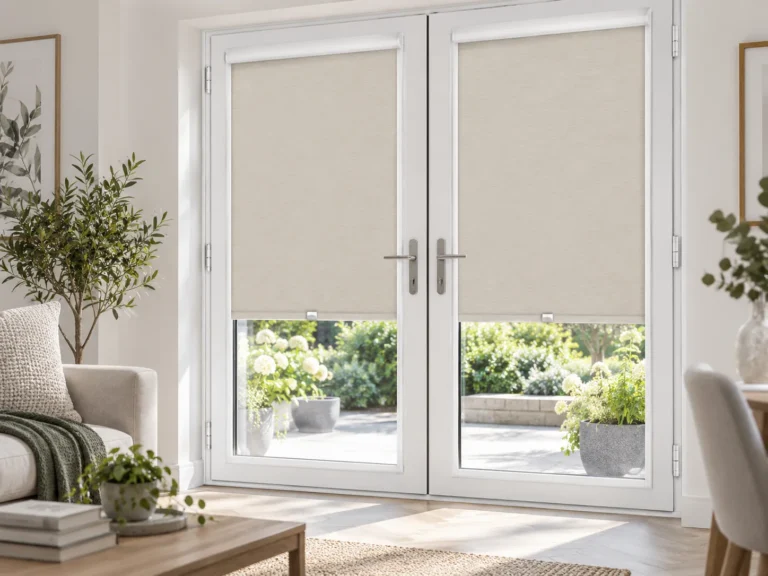
Simple Fabric
A familiar Roller Blind format within the Perfect Fit system, giving suitable panels their own simple fabric covering.
Explore Perfect Fit Roller Blinds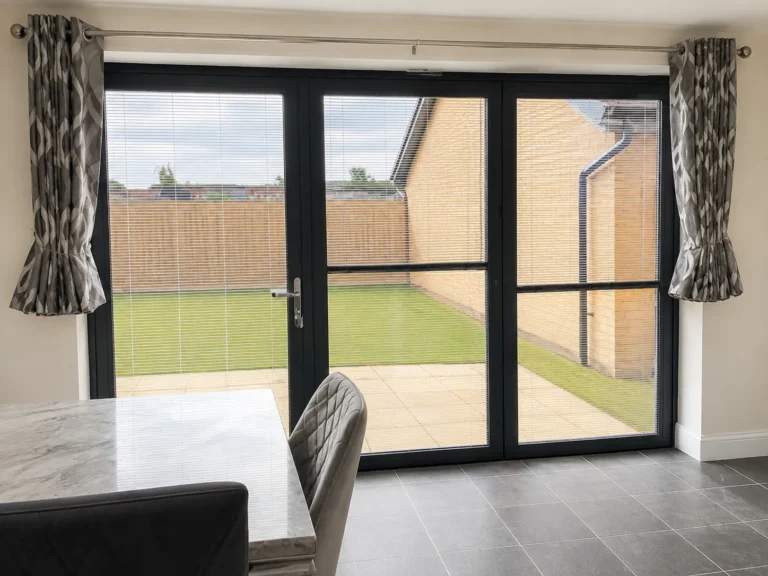
Adjustable Slats
Horizontal aluminium slats provide adjustable light control within a frame-fitted system on compatible patio-door panels.
Explore Perfect Fit Blinds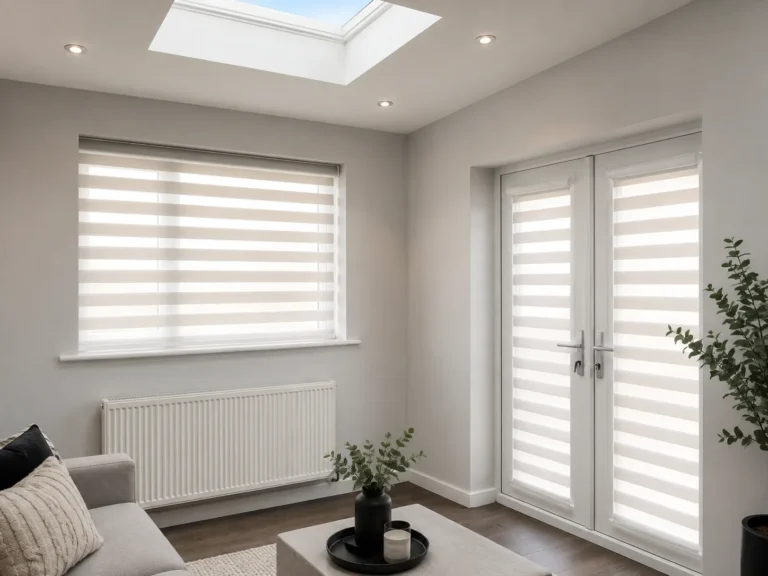
Layered Screening
Layered fabric bands provide adjustable screening within a fitted frame where the chosen Vision system and door are compatible.
Explore Perfect Fit Vision BlindsRoutes to Explore
Different systems solve different problems. Use these routes to explore the blind styles that may be relevant to wide glazed patio or sliding doors.
Side-drawing slats can provide flexible coverage and adjustable screening across broad glazed openings.
Simple fabric blinds may be used individually or in a divided arrangement where the opening and blind sizes allow.
Layered fabric bands provide adjustable privacy and daylight control on suitable wide-door arrangements.
A frame-fitted route for compatible glazed panels where individual control may be useful.
A compact folded-fabric style that may suit selected glazed-door arrangements after compatibility has been checked.
Powered operation may add convenience where the chosen blind system and patio-door layout support it.
Compare What Matters
Instead of choosing by appearance alone, compare how each route works with the door, the room and your normal daily routine.
Access
Consider which section of the doorway you normally use and what the blind has to do before you can walk through comfortably.
Panel Control
Decide whether you want different parts of the glazing to operate independently or prefer one coordinated treatment.
Open Position
Compare how much covering remains visible and where it collects when you want the doorway clear.
Screening
Think about privacy, useful daylight and whether keeping some outside view matters during the day.
Frequency
A door adjusted repeatedly each day benefits from a straightforward control method and an easy repeatable routine.
Appearance
Consider whether you prefer an integrated panel-by-panel appearance or a broader treatment spanning the opening.
Everyday Door Use
An open blind does not disappear. On a patio door, the important question is whether its resting position works with the part of the doorway you use most often.
The aim is not necessarily to expose every inch of glass. It is to keep the normal walk-through area practical without making blind operation unnecessarily awkward.
Identify where people normally enter and leave so the blind layout supports that route.
Check where fabric, slats or the blind assembly will collect once the opening needs to be used.
A door opened repeatedly through the day needs a more convenient routine than one used occasionally.
Panel-based and whole-opening arrangements can leave different parts of the doorway clear.
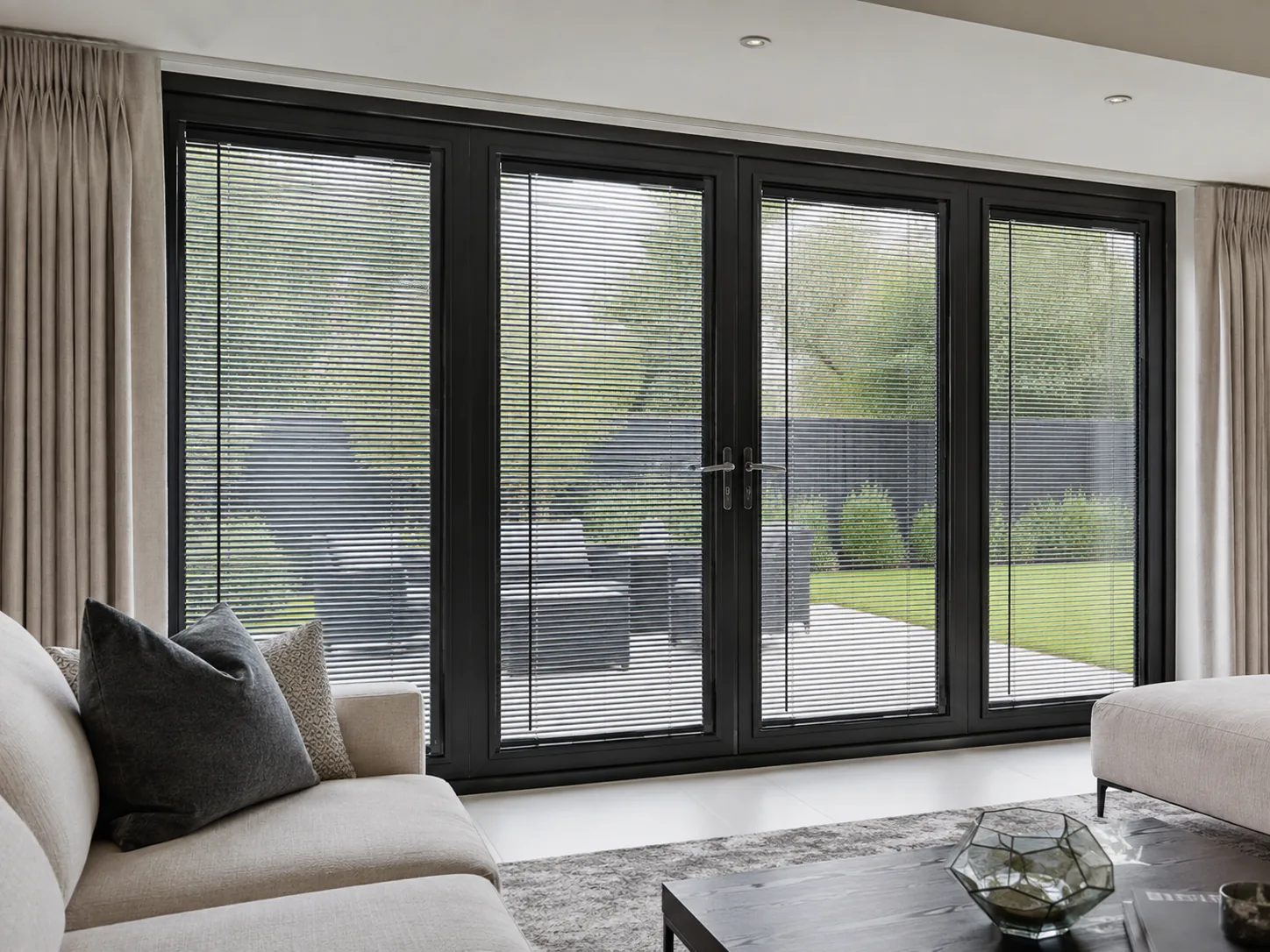
Large patio doors often matter because they bring daylight and an outside view into the room. The useful goal is usually adjustable screening rather than keeping the glazing completely covered all day. More screening generally changes the amount of daylight and outside view you retain. Adjustable blind positions can help you alter that balance as the room and lighting conditions change. Privacy can also feel different after dark when interior lights are on, so no daytime blind position should automatically be treated as guaranteed evening privacy.
Light Reduction Choices
Dimout and blackout materials serve different priorities, but the complete result also depends on the way the blind fits around a broad patio opening.
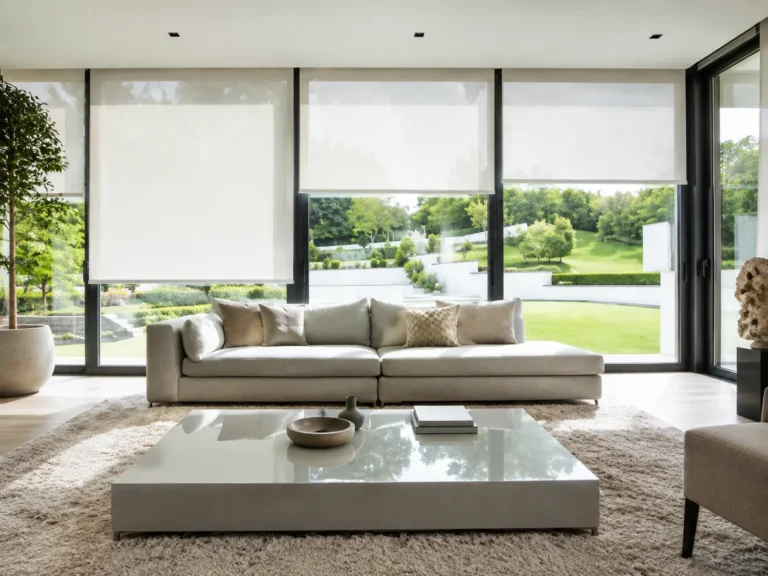
Dimout can reduce brightness and glare while retaining a softer daytime feel.
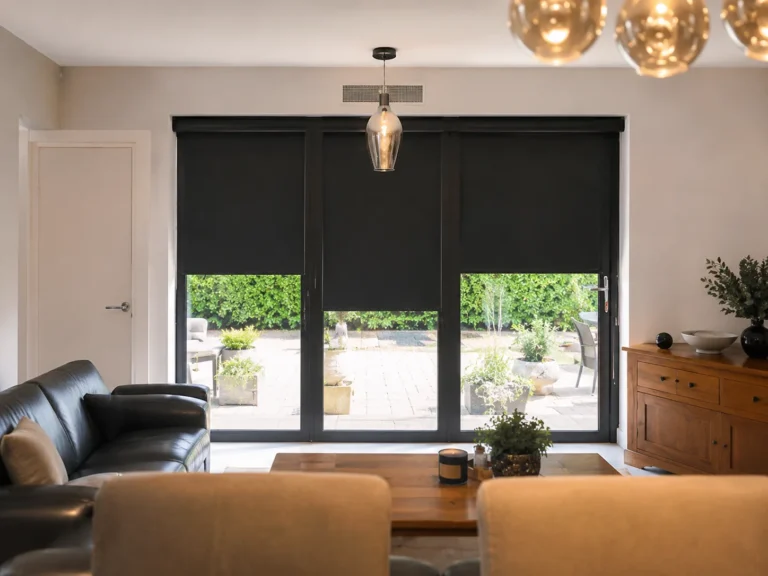
Blackout material is designed to prevent light passing through the fabric itself when the blind is closed.
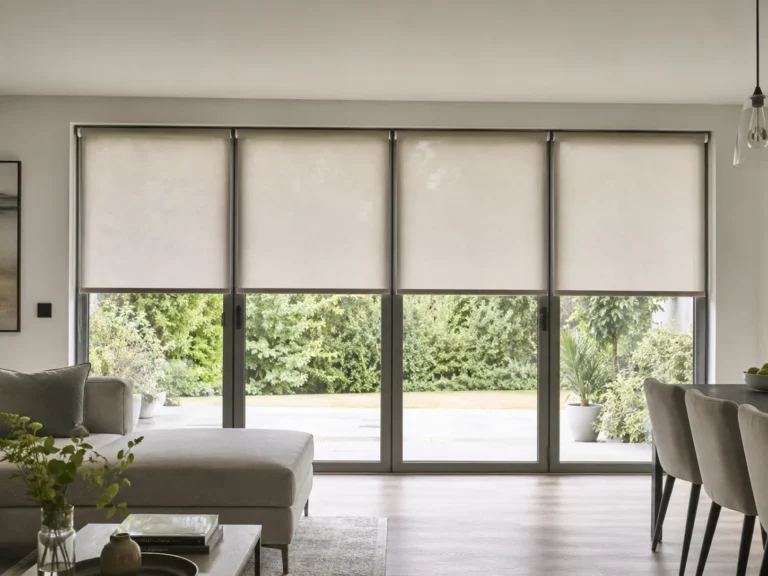
Light can still enter around edges, between separate blinds or through unavoidable gaps in the overall arrangement.
The better choice depends on whether your main concern is softer glare control, stronger room darkening or a balance between the two.
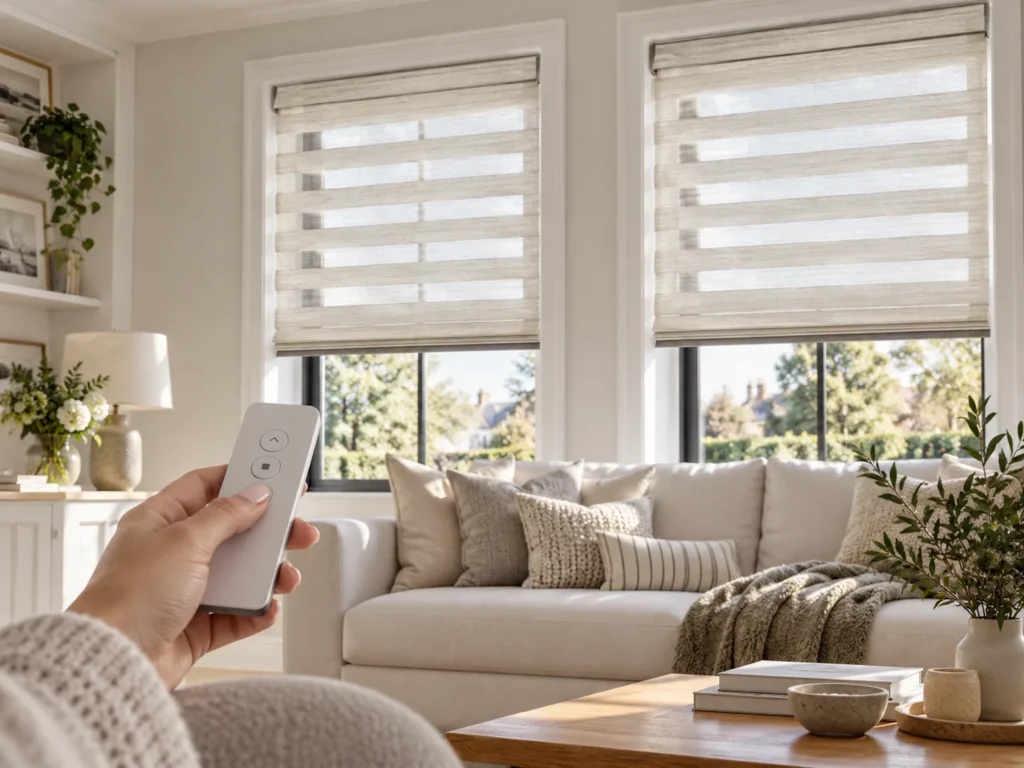
Motorised operation may be worth considering where compatible patio door blinds are wide, adjusted frequently or arranged as several blinds that would be more convenient to control without repeated manual operation. Availability depends on the selected blind system and the actual patio-door arrangement.
Everyday Considerations
Once basic suitability is clear, these everyday details can help you choose a blind that remains practical after installation.
Consider how the blind will be operated and what control arrangement is appropriate for the household.
Large areas of glazing can mean more blind surface, so choose a material and format you are comfortable maintaining.
Patio doors and nearby windows can coordinate through colour, tone or finish without necessarily using the identical blind type.
If curtains or other window dressings will remain, consider how both treatments will sit and operate around the doorway.
Related Specialist Guides
These guides cover wider door questions or specialist systems that may become relevant once you know what matters most for the opening.
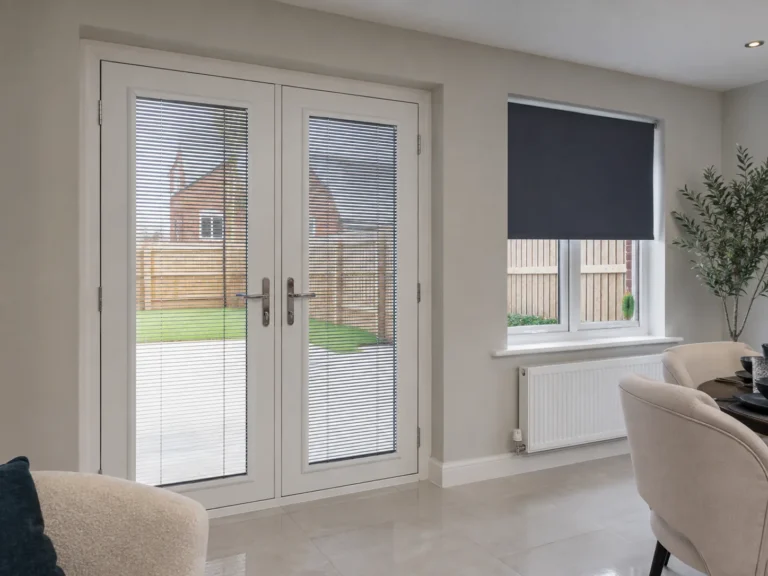
Door Guidance
Broader guidance for glazed doors where you want to compare fitting approaches across different door types.
Explore Door BlindsFrame-Fitted System
Detailed guidance on the frame-fitted system, compatible glazing and the different Blind styles available within Perfect Fit.
Explore Perfect Fit Blinds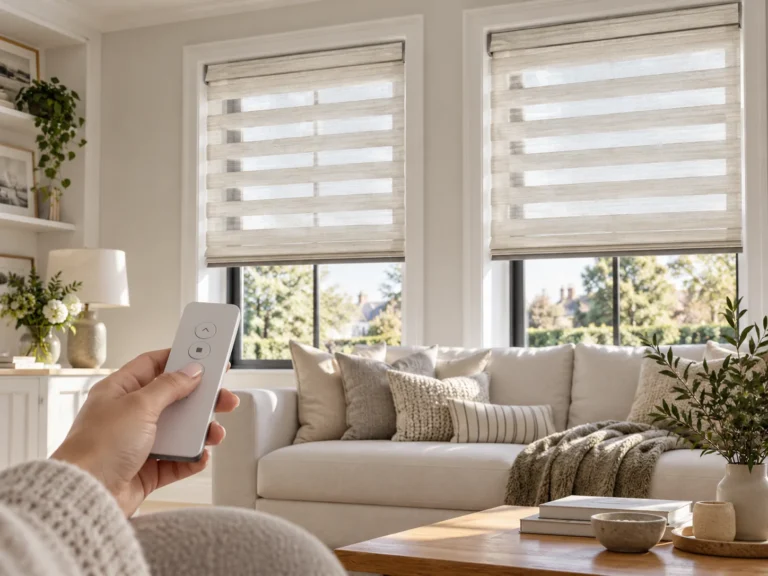
Powered Operation
More information about powered operation where easier control is becoming an important part of the decision.
Explore Motorised BlindsExplore More Blinds
Patio doors are only one part of the home. Explore other main blind types when you are planning nearby windows or coordinating several rooms.
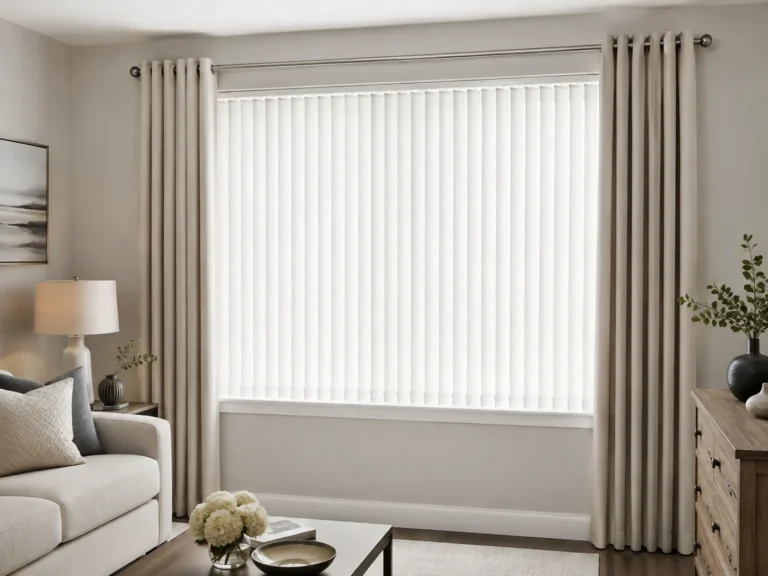
Adjustable Slats
Adjustable vertical slats for privacy and light control across larger windows and suitable doors.
Explore Vertical BlindsSimple Fabric
A simple fabric blind with a clean appearance and straightforward everyday operation.
Explore Roller Blinds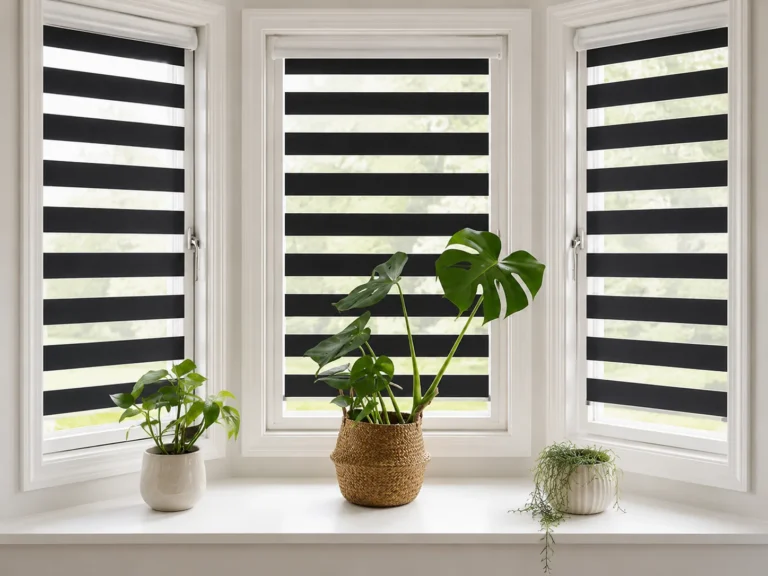
Layered Screening
Layered sheer and opaque bands that allow the balance of screening and daylight to be adjusted.
Explore Vision Blinds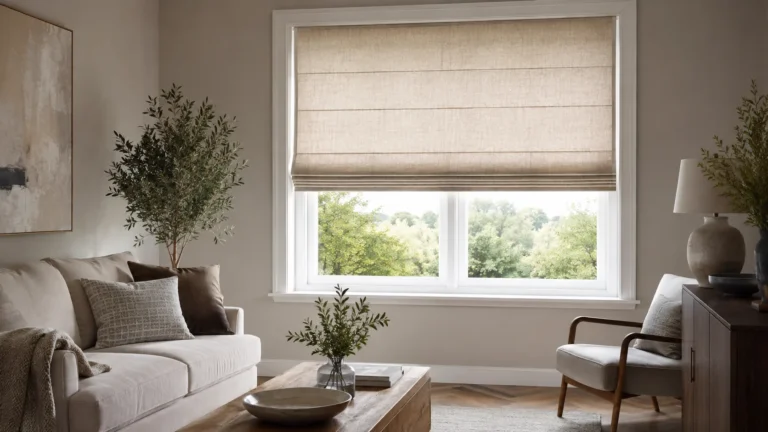
Soft Fabric
Soft fabric folds create a more decorative finish for living spaces and bedrooms.
Explore Roman Blinds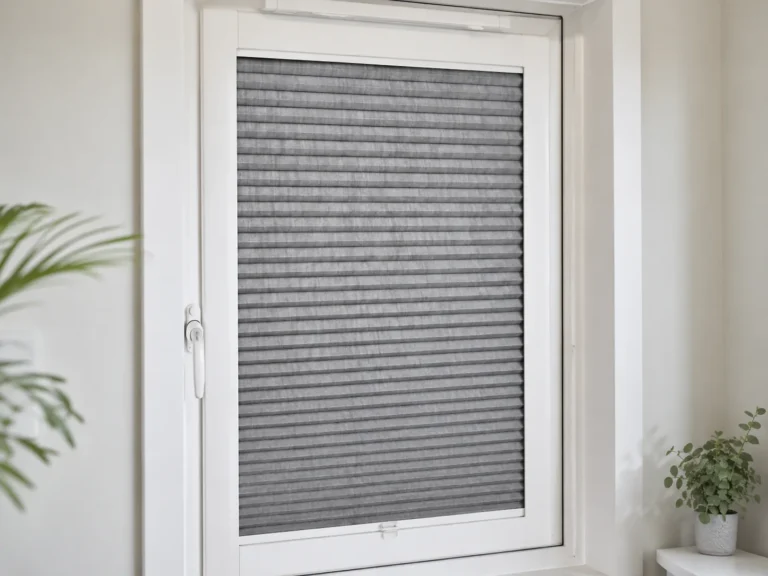
Frame-Fitted
Frame-fitted blinds for compatible windows and glazed doors where an integrated look is preferred.
Explore Perfect Fit Blinds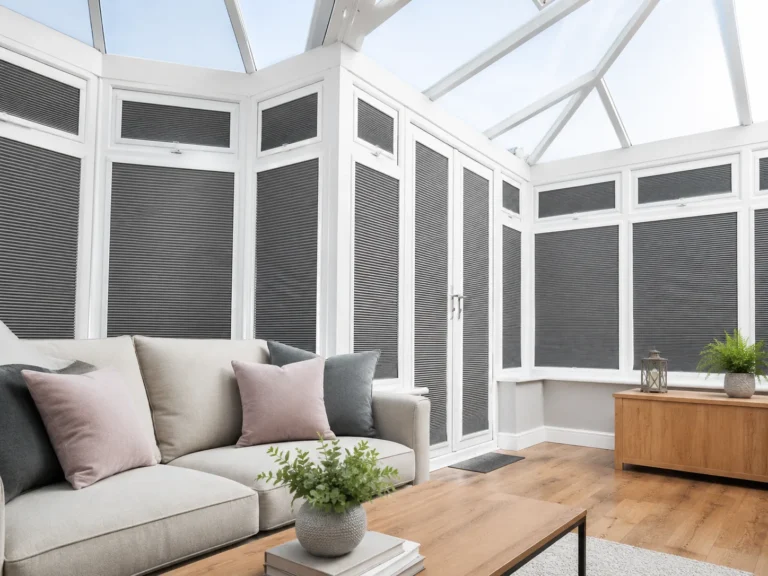
Compact Fabric
Compact folded-fabric blinds suited to a wide range of standard and specialist glazing applications.
Explore Pleated Blinds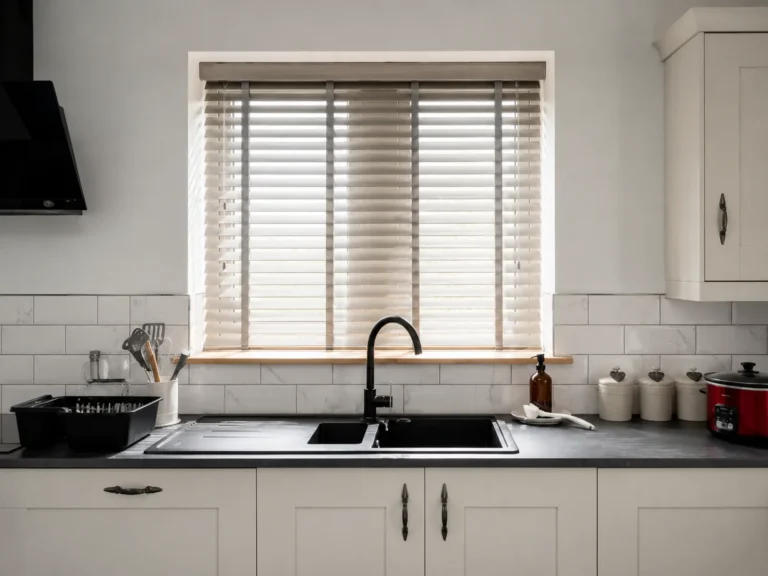
Horizontal Slats
Adjustable horizontal slats provide flexible light and privacy control with a structured appearance.
Explore Venetian Blinds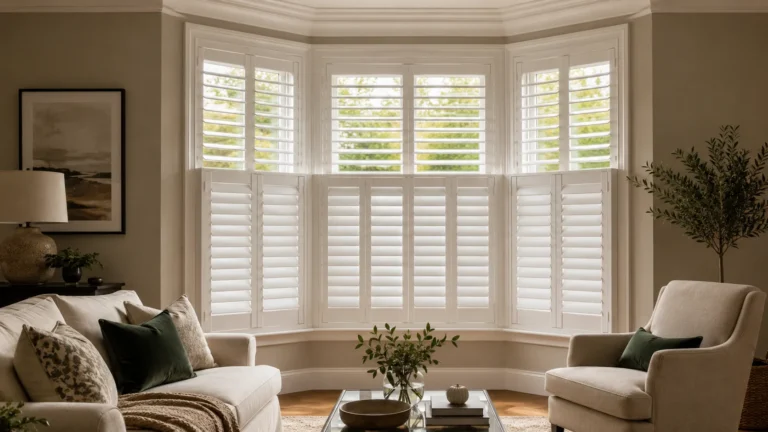
Architectural Finish
Panelled window coverings offering adjustable louvres and a more architectural finished look.
Explore Window ShuttersMore Specialist Routes
Continue through the remaining main blind routes, specialist door guides and skylight guidance where another opening is part of your project.
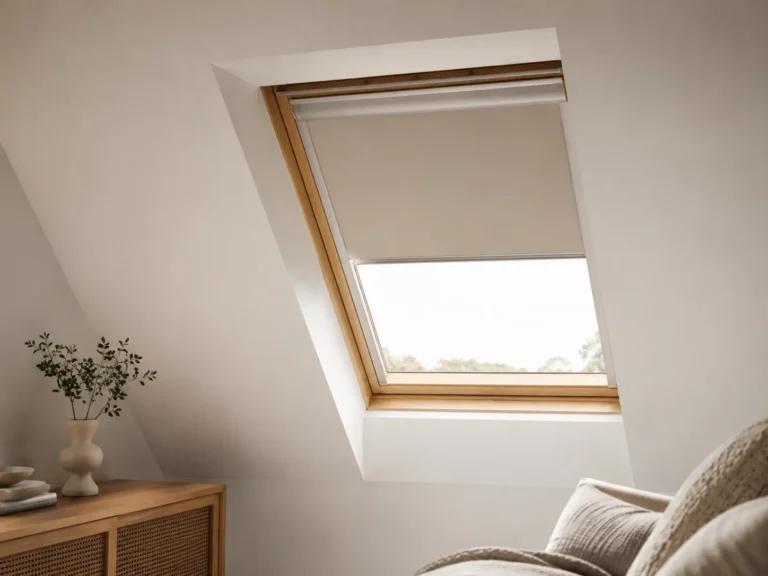
Roof Windows
Brand-specific blind guidance for compatible VELUX roof windows and their appropriate operating choices.
Explore VELUX Blinds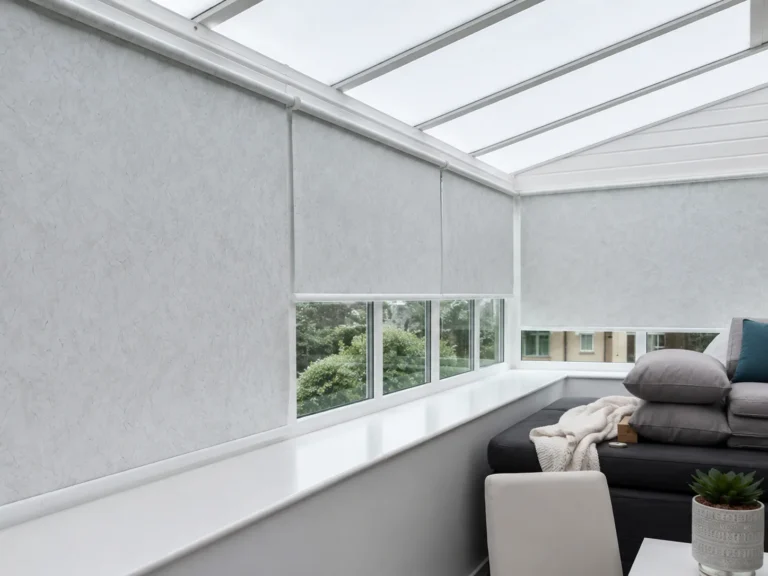
Multi-Zone Glazing
Guidance for side glazing, doors and roof areas where different parts of the conservatory may need different solutions.
Explore Conservatory Blinds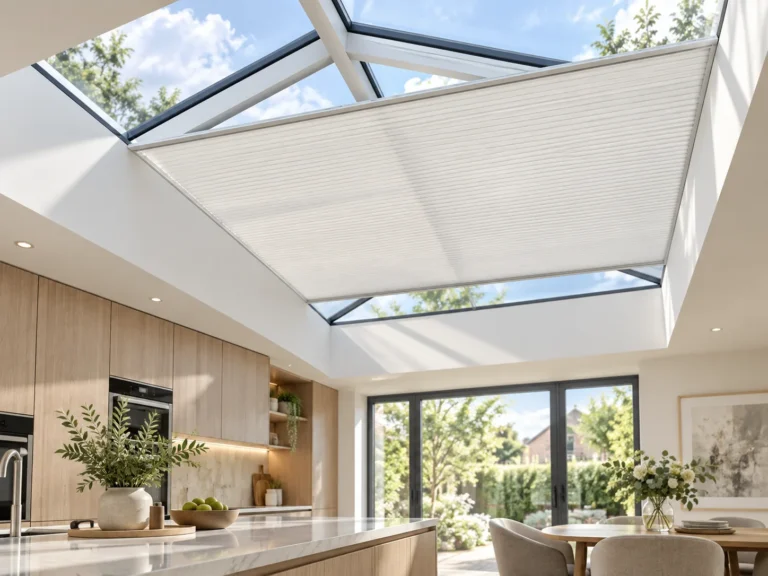
Overhead Glazing
Specialist shading guidance for large overhead glazed roof lanterns.
Explore Roof Lantern BlindsDoor Guidance
General guidance for glazed doors where the opening type has not yet been narrowed to a specialist route.
Explore Door Blinds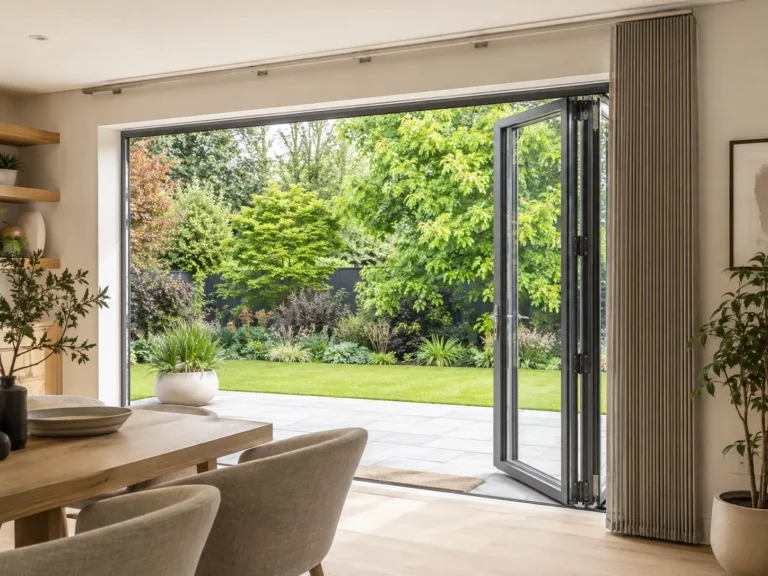
Folding Panels
Advice focused on folding panels, stack-back movement and everyday access.
Explore Bi-Fold Door Blinds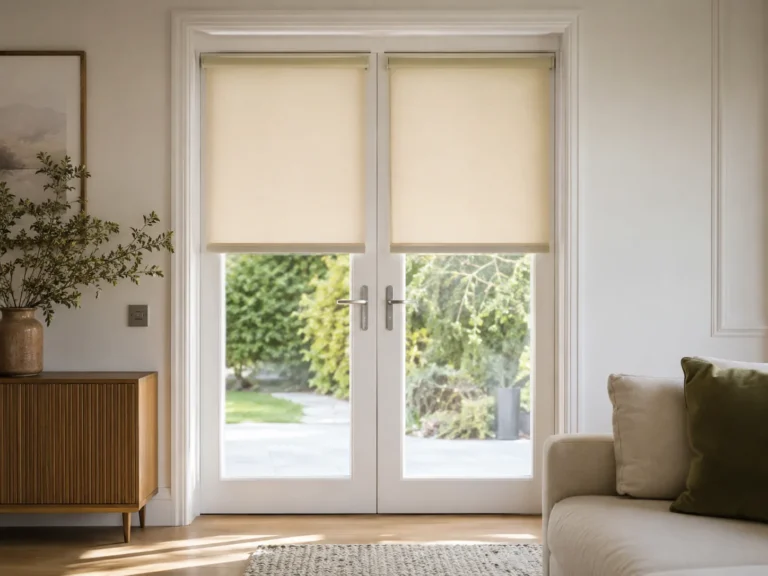
Paired Doors
Guidance for paired hinged doors where handles, movement and individual-door control matter.
Explore French Door BlindsSliding Doors
Guidance for broad patio and sliding doors where width, movement, access and stack position shape the choice.
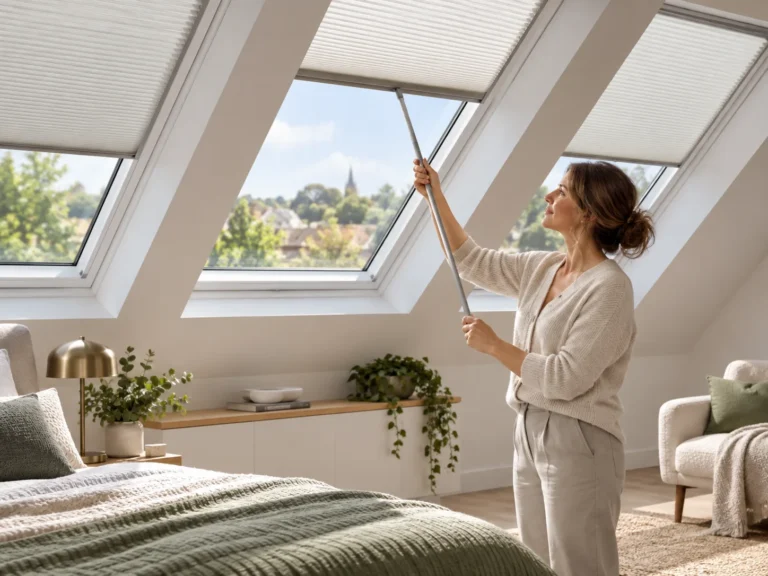
Roof Glazing
Advice for skylights and roof windows where angle, access and specialist fitting need consideration.
Explore Skylight BlindsLocal Patio Door Blind Service
Heavenly Blinds provides home appointments, measuring and professional fitting across Greater Manchester. Use the area directory to find the relevant local service page for your location.
Why Heavenly Blinds
Choosing for a large glazed doorway can involve more than picking a blind style. Heavenly Blinds helps with the practical decisions, measuring and finished installation.
Discuss the patio doors, how they move and what you want from privacy, daylight and everyday access.
The opening is measured at your property so the proposed made-to-measure arrangement can be based on the actual doors.
Once the preferred option and specification are clear, Heavenly Blinds provides a free quotation.
The selected blinds are supplied for the relevant opening and agreed requirements rather than as a standard off-the-shelf size.
Heavenly Blinds professionally fits the blinds it supplies, with attention to normal operation and a neat finished result.
The supplied and fitted work is supported by the confirmed 12-month guarantee.
How It Works
The process is kept straightforward so the patio doors can be assessed before you commit to a made-to-measure blind solution.
Contact Heavenly Blinds and arrange a free appointment at your property.
We look at the opening, take measurements and discuss suitable options based on the way the doors are used.
Choose the preferred blind, fabric and relevant options, then receive a free quotation for the agreed specification.
The made-to-measure blinds are supplied and professionally fitted at your home.
Customer Reviews
Read genuine customer feedback about Heavenly Blinds, including experiences of advice, communication, measuring and professional blind fitting.
We had an amazing experience , everything was done in timely manner to the highest quality and standards . The interaction was very helpful and clear. professionally executed. Thank you.
Very good quality and reasonable price would recommend to anyone fantastic
Good quality work, excellent service.Thank you.
Just had some beautiful new vertical blinds fitted by Heavenly Blinds. Excellent customer service and a very good price. Would definitely recommend.
Very professional and respectful would definitely recommend to friends and family
Great service, good price, and reliable.
Came to fit as agreed and completed efficiently to an excellent standard. Would highly recommend ⭐⭐⭐⭐⭐
Had some blinds fitted the other day by these , absolutely love my new blinds. Would definitely recommend this company and will be back for more ..thank youuuu
Good experience, good quality blinds with different varieties to choose from and fitted perfectly, great communication, Happy with the service provided
super fast reliable service great guys job completed on time no delays would definitely recommend and use them again
I'm glad I chose this company. I recommend it.
Free Home Appointment
Arrange a free home appointment and we can look at the actual doors, discuss suitable blind options, take measurements and prepare a free quotation for the option you choose.
Common Questions
Practical answers about stack position, sliding movement, fitting, privacy, blackout and everyday use.
There is no single acceptable stack size. The useful test is whether the blind leaves the part of the doorway you normally use comfortable and practical. Consider where the covering collects, which section is the main walk-through route and whether the open blind conflicts with handles or moving panels.
A correctly planned blind should not interfere with normal door movement. The sliding panel, blind position, handles, locks and surrounding frame all need to be considered together. Exact clearance depends on the real opening, so patio door blind fitting should be confirmed by measuring rather than assumed from standard dimensions.
Several blinds can make sense when sections need independent control, one part of the doorway is used more frequently or dividing the wide span creates a more practical arrangement. One larger treatment can look more unified, so the better made-to-measure approach depends on access, control and the actual opening.
Sometimes, but compatibility cannot be assumed. The fitted blind and frame need enough usable space to avoid interfering with neighbouring panels as the doors move. Perfect Fit blinds for patio doors should therefore be confirmed against the actual frame, glazing, handles and panel movement before ordering.
Yes. A frequently opened door places more importance on quick access, straightforward operation and where the blind sits when open. Identify which panel is used most often, then compare whether whole-opening coverage or more independent control creates the easier routine.
Often you can retain more of the view by using adjustable screening rather than keeping the blind completely closed throughout the day. Slats, layered fabrics or separately controlled sections can vary the balance, although privacy can change after dark when interior lights are on.
Blackout fabric is designed to block light through the material, but that does not guarantee a completely dark room. Light can still enter around edges, between separate blinds or through fitting gaps, so strong light reduction is a more realistic expectation.
Motorisation can become useful when suitable blinds are wide, adjusted frequently or arranged as several sections that would be more convenient to operate together. Availability depends on the selected blind and compatible control system, so it should be confirmed rather than assumed.
Handles, locks and overlapping frame sections can occupy space the blind would otherwise need, so their full movement should be considered before the fitting position is chosen. The blind and door both need to operate freely, which is why the actual frame and hardware should be measured.
Vertical Blinds can suit broad openings where one treatment needs to draw sideways and leave the normal access point clear. Perfect Fit may suit compatible glazed panels where individual-panel control is more useful. The better route depends on door construction, movement, access and normal daily use.